
From July 1–4, Swiss Hockey’s U16 girls and U16 boys will compete in the EuroHockey5s Championship in Alanya (TUR). We were able to conduct an interview with Mathias Schaeben.
EuroHockey5s U16 Championships 2026
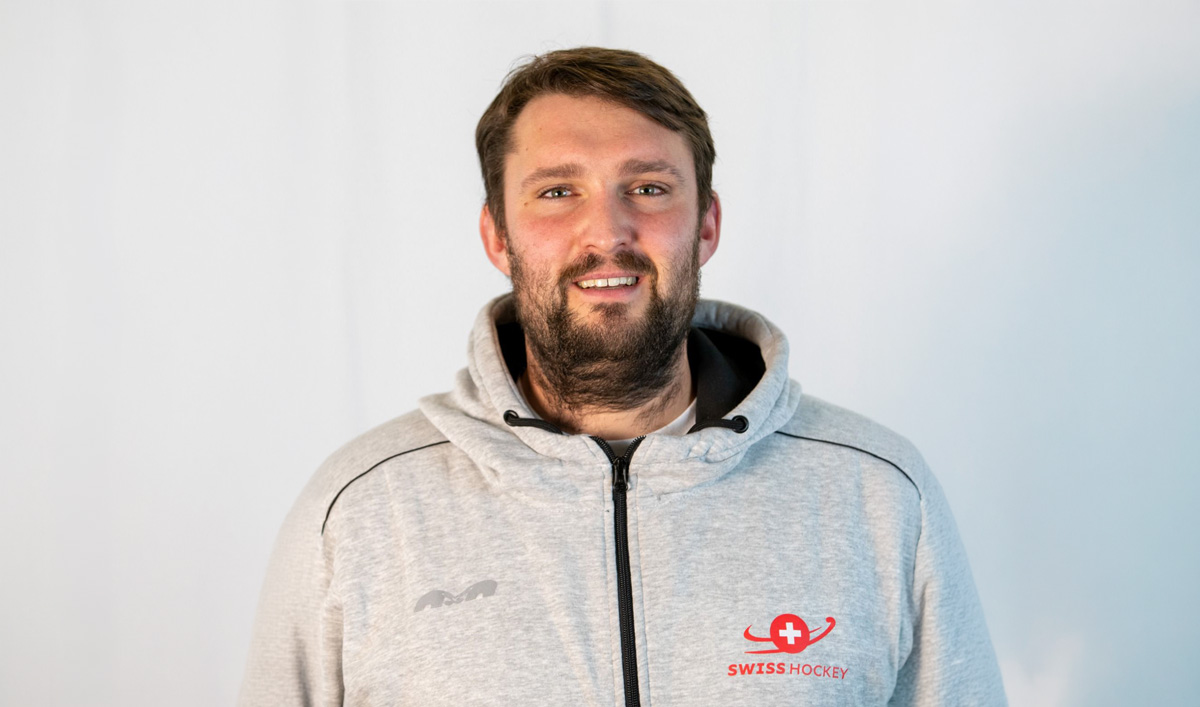
Swiss Hockey: Mathias, the EuroHockey5s U16 Championships are just around the corner. What are our U16 girls’ and boys’ teams hoping to achieve in Turkey? Where do you see the biggest opportunities for our teams, and which nations do you think will be in contention for the title?
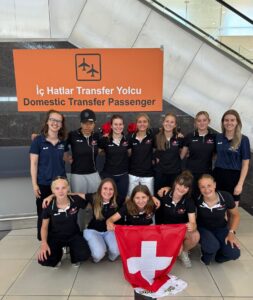 Mathias Schaeben: Generally speaking, it’s always difficult to predict how a tournament will unfold at the U16 level. We know that our girls and boys are well-prepared and have strong players as well as very good goalies. At the same time, we don’t know where we stand compared to the other nations. Youth development varies from country to country, and we have very few points of comparison going into the tournament. Nevertheless, we’re heading to Alanya with clear ambitions. The experiences and results of past years show that we have the potential to reach the semifinals with both teams and compete for a medal. We’ve set this same goal for this year’s European Championship. However, who ends up competing for the title won’t depend solely on the quality of play. The conditions in Alanya, with high temperatures, will pose major challenges for all teams. Especially in Hockey5s, where the game is extremely dynamic and matches can be decided in a matter of moments, it will be crucial to keep a cool head even under difficult conditions and make the right decisions at the decisive moments. I’m convinced that our teams have what it takes to play a strong role and represent Switzerland with dignity.
Swiss Hockey: The success of our junior national teams begins at the club level. In your view, what characterizes successful youth development, and what particularly positive trends are you currently observing in Swiss club hockey?
Mathias: In my view, youth development in Swiss clubs has taken a huge leap forward in recent years. We’re reaping the benefits of this today at every level of the Swiss Hockey Pathway. A major factor in this is the “Kinderlandhockey” concept developed by Andy Gasser, which has become established throughout Switzerland in recent years. It provides children with a playful and age-appropriate introduction to our sport and ensures that significantly more players are now advancing to the U14 regional teams with a solid technical and tactical foundation. Through their daily work, the clubs lay the foundation for the development of our future national youth players. I am particularly pleased that the geographic diversity of players in the regional teams and youth national teams has increased significantly over the past ten years. Talented players now come from a wide variety of clubs—and even players from supposedly smaller clubs are making the leap to a European Youth Championship. This shows that effective youth development does not depend on the size of a club, but rather on dedicated coaches, sustainable training, and a supportive environment. This trend is particularly evident among young female players. Both the number of female players and the competitive level of our youth national teams have shown a steady upward trend in recent years. This is a clear sign of the outstanding work being done in the clubs.
Of course, there are still areas where we can improve. But when I look at the progress made over the last ten years, I am convinced that, together with our clubs, we have taken an important step forward. For this, a big thank you is due to all the coaches, officials, and volunteers who dedicate themselves to youth development every day.
Swiss Hockey: The EuroHockey5s Championship marks the end of Swiss Hockey’s international Hockey5s journey. Why was this strategic decision made, and what role can Hockey5s still play in the development of young players?
Mathias: I certainly regret that this will be our last Hockey5s European Championship with the U16 national teams for the time being. Hockey5s offers many exciting elements that our young players can benefit from. The fast-paced game promotes technical skills, quick decision-making, and playing in tight spaces—skills that are highly valued in both field and indoor hockey.
Nevertheless, the international landscape has changed significantly in recent years. At the U16 level, Hockey5s no longer offers the competitive value at the European level that we desire for the development of our young talents. Most nations that compete against us in international 11-a-side hockey have withdrawn from Hockey5s competitions and are once again focusing their resources entirely on Olympic field hockey.
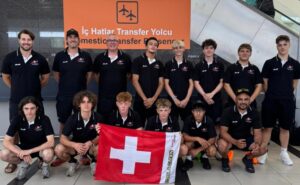 With the introduction of the Swiss Hockey Pathway and the realignment of our youth development program, we are now training significantly more players than we were just a few years ago. Our goal is to enable as many talented players as possible to progress from their clubs through regional selections to the youth and senior national teams. To achieve this, we must target our human and financial resources specifically where they generate the greatest developmental value. For this reason, we have decided to focus entirely on international field hockey at the U16 level. Another setback was undoubtedly the exclusion of Hockey5s from the 2026 Youth Olympic Games, for which we had given our all.
However, this by no means implies that Hockey5s is losing importance for the clubs or for player development—quite the contrary. Especially in children’s field hockey, the Hockey5s boards offer kids fun and games. In my view, Hockey5s remains a valuable training tool—even if we’ll be focusing on Olympic 11-a-side hockey at the international level going forward.